Two Fundamentally Different Approaches
Waterproofing methods fall into two broad camps: sheet membranes applied with heat (torch-on) and liquid-applied systems that cure in place. Both work. Both have long track records in Singapore's climate. The right choice depends on where you're waterproofing, the condition of the surface, your budget, and how long you want the system to last.
Understanding how each method works helps you ask the right questions when getting quotes — and spot when a contractor is recommending the wrong system for your situation.
How Torch-On Membrane Works
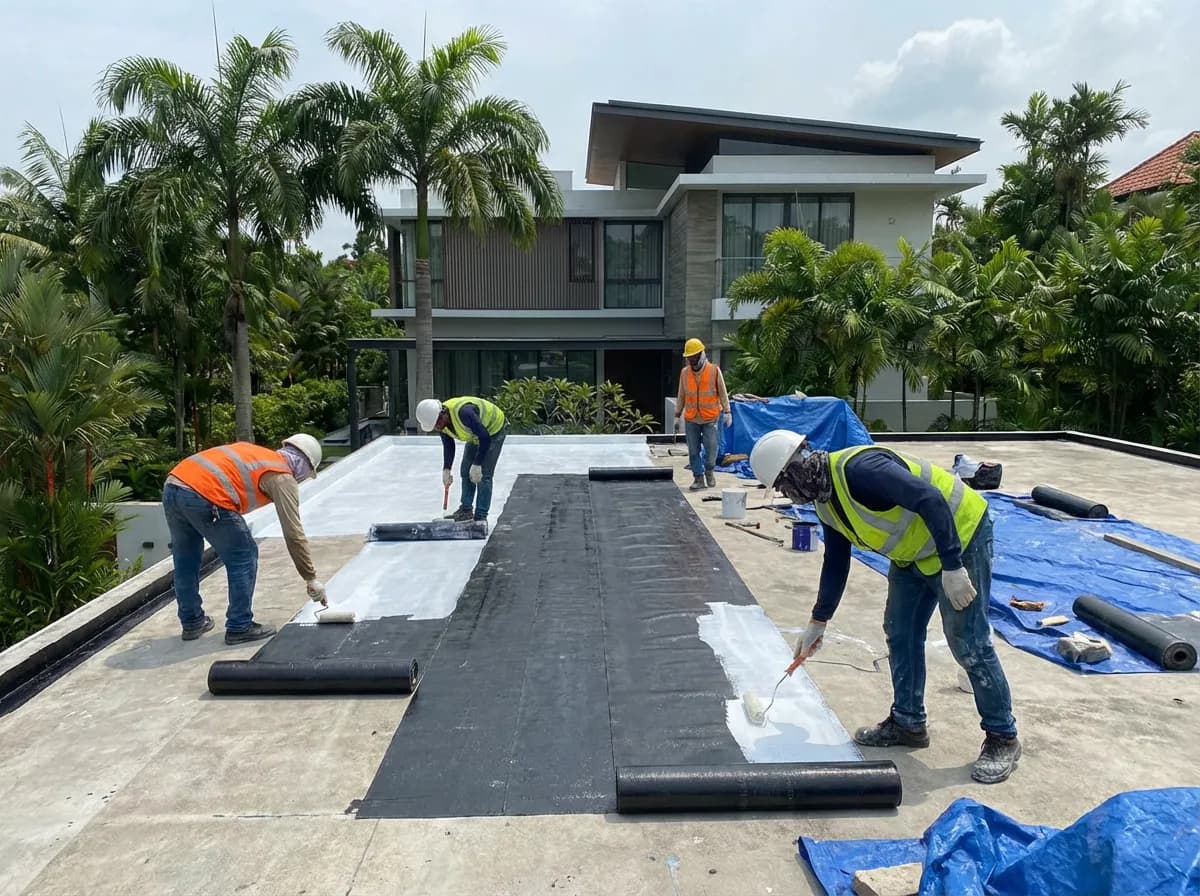
Torch-on waterproofing uses pre-manufactured sheets of modified bitumen (APP or SBS modified) that are unrolled across the surface and bonded using a gas torch. The heat melts the underside of the membrane, fusing it to the substrate and to adjacent sheets at the overlaps. The result is a continuous, fully bonded waterproof barrier.
A typical system includes a primer coat, one or two layers of membrane (3mm to 4mm thick each), and protective finishing. The overlaps between sheets — usually 100mm minimum — are heat-welded to form a seamless joint. When properly installed, torch-on membrane is extremely durable and can withstand foot traffic, UV exposure, and ponding water.
The process requires skilled applicators with experience using open flames safely. In Singapore, this means additional fire safety precautions during application, particularly on residential roofs near combustible materials.
How Liquid Waterproofing Works
Liquid waterproofing uses polymer-based coatings — polyurethane (PU), acrylic, or polyurea — applied by roller, brush, or spray in multiple coats. The liquid flows into cracks, around details, and across the surface to form a seamless membrane as it cures. Total thickness is typically 1.5mm to 3mm across several coats.
PU systems are the most common for Singapore roofs. They offer excellent UV resistance, flexibility, and adhesion. Application is simpler than torch-on — no open flames, less equipment, and faster for small or complex areas. Each coat needs curing time (typically 4 to 8 hours between coats), so application spans 2 to 3 days for a typical roof.
Quality liquid systems use reinforcement fabric embedded between coats at critical areas — edges, drains, cracks, and joints — to add tensile strength and crack-bridging ability.
Durability and Performance
Torch-on membrane wins on raw durability. A quality two-layer SBS modified bitumen system lasts 15 to 25 years in Singapore's climate. It handles thermal cycling, UV degradation, and mechanical damage better than most liquid systems. Torch-on is the standard for commercial buildings, hospitals, and schools — applications where failure isn't an option.
Quality PU liquid systems last 8 to 12 years — respectable, but shorter than torch-on. They're more susceptible to UV degradation over time (surface chalking and cracking) and less resistant to mechanical damage like dragged furniture or dropped tools. However, they're easier to maintain and recoat — extending life indefinitely with periodic maintenance coats every 5 to 8 years.
For aggressive environments — rooftop gardens with soil loads, heavy foot traffic areas, or roofs with mechanical equipment — torch-on is the more reliable choice. For standard residential roofs with light traffic, liquid systems provide adequate performance at lower cost.
Best Applications for Each Method
Torch-on membrane is the preferred choice for large flat roofs (over 1,000 square feet), roofs with significant foot traffic or equipment, rooftop terraces and gardens, areas with a history of persistent leaks, and situations where maximum lifespan is the priority. Its uniform thickness and heat-welded joints provide consistent, predictable protection.
Liquid waterproofing excels in complex geometries — balconies with many edges and details, bathrooms, planter boxes, small or irregularly shaped areas, and roofs with lots of penetrations (pipes, vents, anchors) where cutting and fitting sheet membrane would be difficult. It's also the easier system for a maintenance recoat over existing waterproofing.
For bathroom and wet area waterproofing within a home, liquid systems are almost always the correct choice. Torch-on membrane is overkill for internal applications and impractical in confined spaces.
Cost and Practical Considerations
Torch-on membrane costs 30 to 50% more than liquid systems — $15 to $22 per square foot versus $8 to $15 per square foot. This reflects the higher material cost, more skilled labour requirement, and longer installation time. However, on a per-year-of-life basis, torch-on can be cheaper if you factor in the longer lifespan.
Liquid systems have a practical advantage during Singapore's wet season: they can be applied in smaller windows of dry weather, as each coat only needs a few hours to cure. Torch-on requires a fully dry surface and cannot be applied during or immediately after rain, which can delay projects during monsoon months.
At DirectHome, we recommend torch-on membrane for large, flat, high-value roof areas where long-term performance justifies the investment. For balconies, small roofs, maintenance recoating, and budget-conscious projects, quality PU liquid waterproofing delivers excellent results at a sensible price.
Related Services
Need Help With Your Project?
Get a free site assessment and no-obligation quote.